【Naorai Inc.】Overcoming the Weaknesses of Sake with "Low-Temperature Distillation": A New Beverage Category "Jochu" Saving Local Breweries and Revitalizing Agriculture
The Crisis of Small Breweries and Sake's "Achilles' Heel" in Global Export
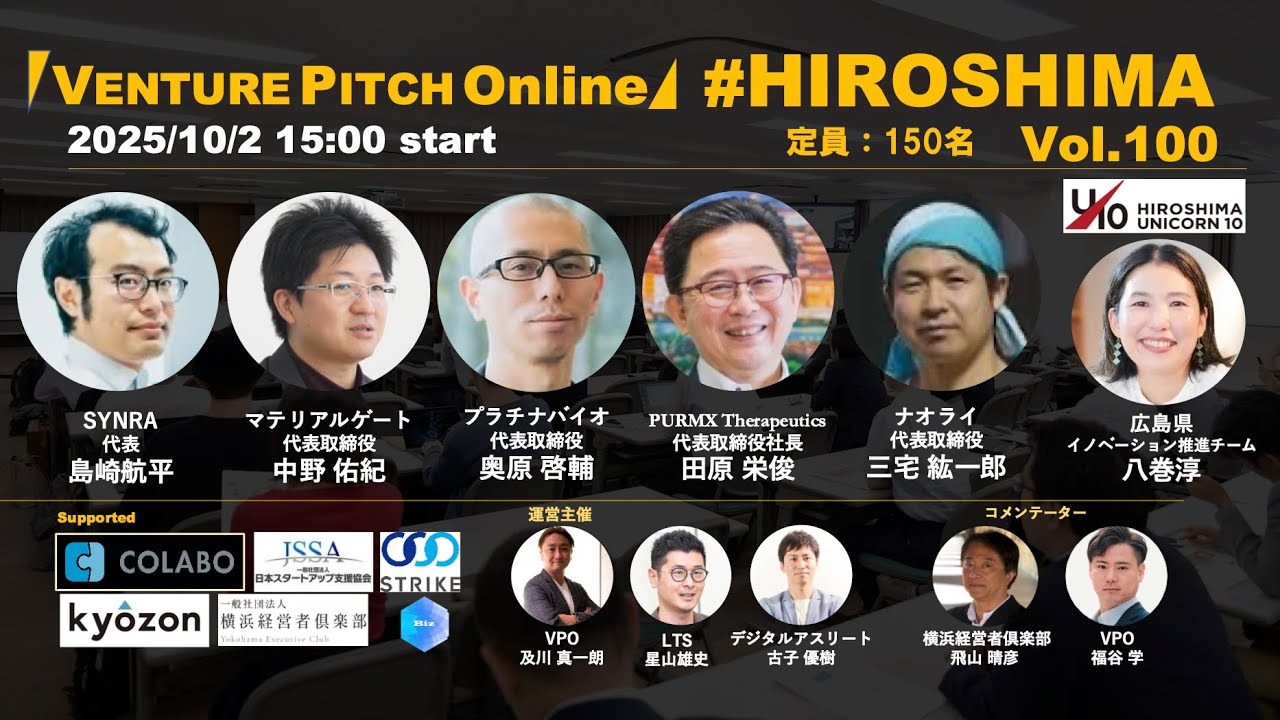
Hello everyone. I am Koichiro Miyake, CEO of Naorai Inc.
Hiroshima Prefecture, where our company is based, is widely known as one of Japan’s leading sake-producing regions. However, sake breweries that once numbered 4,000 across the country are shutting down one after another, and this wonderful traditional culture is on the verge of disappearing.
Currently, there are about 1,200 active sake breweries in Japan, but the reality is harsh. Only the top 50 or so companies are selling well globally. The remaining 1,000+ breweries are tiny operations with annual sales of only 20 to 200 million yen. If this structure continues, it is predicted that the number of breweries in Japan will decrease to around 300 in 50 years, and local sake culture will vanish.
We want to revitalize the sake industry by "adding a new business model" to the traditional system.
Sake has two major disadvantages when expanding overseas: "freshness is most valued, and quality deteriorates over time" and "refrigerated management (cold chain) is mandatory." Because sake is delicate, like a fresh food product, it carries a high risk of deterioration during global distribution, which has been a major barrier (Achilles' heel) to export expansion.
We developed an innovative, patented technology to overcome these weaknesses and tap into the rapidly growing global spirits market. That is "low-temperature distillation."
Patented "Low-Temperature Distillation" Creating "Jochu": Preserving Sake Aromas While Enabling Room-Temperature Aging
Typical distillation heats alcohol to high temperatures to extract it. However, this process destroys the delicate aromas of sake, such as the fruity ginjo aroma and the rich fragrance of rice.
Our patented low-temperature distillation process creates a vacuum to distill at an extremely low temperature of "39°C or lower," which is about the temperature of a warm bath. This succeeds in extracting only the alcohol without destroying any of the delicate sake aromas.
The result is a completely new beverage category that is neither sake, shochu, nor whiskey: "Jochu (常駐)."
Jochu retains the brilliant aroma of sake but is finished as a high-proof, clear spirit.
By transforming sake into Jochu, we bring a dramatic breakthrough to the sake industry.
First, because it is a distilled spirit, it can be stored at room temperature for long periods, completely eliminating refrigeration costs and deterioration risks. Furthermore, unlike sake, it can undergo "long-term aging (vintage processing)," where its value increases the longer it sits.
Jochu aged in wooden barrels turns into a golden liquid with a rich flavor similar to Japanese whiskey. Today, overseas fans and corporate owners are purchasing our barrels as "barrel owners," establishing a high-value-added fan business.
Health-wise, because it has almost zero sugar, it is highly supported by customers who are limiting carbohydrates but love the elegant aroma of sake.
Moreover, as a sustainable ecosystem, we do not waste the "by-products (amino acids and fermented extracts)" generated during distillation. We are commercializing these into fermented seasonings for children and seniors who do not drink, and health foods using biotechnology. This model expands our presence from the shrinking sake market into the growing global spirits and healthcare markets simultaneously.
From Hiroshima to Noto Peninsula: Expanding to 47 Prefectures as a "Local Zebra"
The primary feature of our model is that it dramatically increases the income of local rice farmers, directly linking to regional revitalization.
We purchase sake from local breweries and transform it into high-value-added Jochu and bio-seasonings at our local distilleries. This system is designed so that a distillery can be fully operated by just four staff members.
It is a package that can be expanded nationwide like a franchise.
In fact, we expanded this Jochu model, which we developed in Hiroshima, to the Noto Peninsula in Ishikawa Prefecture, which was severely affected by the Noto Peninsula Earthquake.
Following the disaster, we received investments and support from the Hokuriku Reconstruction Fund (an impact investment scheme) to establish and operate our "Noto Distillery." By producing Hiroshima Jochu from Hiroshima sake and Noto Jochu from Noto sake, the project serves as a symbol of restoring local sake culture and rice farming.
We have already confirmed plans to expand to Nagaoka in Niigata, Zenkoji in Nagano, and Yame in creeping Fukuoka. We will continue to expand this system nationwide under the slogan "Aiming for 47 Prefectures."
Furthermore, we plan to export the Jochu model itself—the system of turning rice into sake, Jochu, and health foods from by-products—to rice-growing regions overseas, such as Taiwan, Basque, Hawaii, and Hanoi.
Supported by Hiroshima Prefecture and local corporations, we have raised a total of approximately 200 million yen in funding. We have also welcomed a member on a two-year secondment from Japan Post to strengthen our management structure.
We received the grand prize at the pitch contest on the television program "Gacchiri Monday," and had the opportunity to present our business to the Chairman of Asahi Shuzo (brewers of Dassai), Mr. Sakurai.
Our vision is not to grow rapidly as a unicorn focusing on big cities, but to fly globally as a "local zebra" that takes root in regions, supporting sake culture and communities sustainably for decades. We hope you will join us in this challenge to update Japanese traditional culture. Thank you very much.
Q&A and Feedback
Commentator (Mr. Tobiyama): Thank you, Mr. Miyake, for the presentation. I have been into sake for about five years, and I enjoy buying local sake when traveling to compare them at home.
I am highly interested in the new category "Jochu" and the "low-temperature distillation" technology. Compared to traditional spirits, how does the taste and aroma differ? Could you share more details on how the low-temperature distillation changes the spirit?
Mr. Miyake: Thank you for the question.
Traditional distillation boils sake at high temperatures to extract alcohol, which unfortunately boils off the delicate, fruity ginjo aroma (reminiscent of apples or pears) and the gentle fragrance of rice.
In contrast, our low-temperature distillation creates a vacuum inside the equipment to lower the boiling point dramatically. This allows us to distill at a lukewarm temperature of 39°C or lower. As a result, we can capture the gentle and brilliant sake aroma into the liquid while extracting only the alcohol.
Because sugars are removed, it is a dry, crisp spirit on the palate, similar to whiskey or gin. However, the moment you sip it, the sweet ginjo aroma of sake spreads in your mouth. This is the unique taste and aroma of Jochu, which is completely different from both rice shochu and traditional sake.
Mr. Tobiyama: I see. You turn sake into a sugar-free spirit that can be stored at room temperature while keeping its sweet, gentle aroma.
I would also like to ask about global expansion. As you mentioned Mr. Sakurai of Dassai, Japanese sake is currently attracting global attention. What are your strategies to expand Japanese sake culture globally?
Mr. Miyake: Indeed, the biggest bottlenecks for exporting sake are the "value of freshness" and the "need for refrigeration."
Sake lacks the concept of vintage aging like wine. It is delicate, and leaving it at room temperature quickly deteriorates its quality. Maintaining a perfect cold chain in global distribution networks is highly expensive.
Our Jochu model converts sake into a distilled spirit. It does not deteriorate even if left at room temperature for years. On the contrary, it ages beautifully and increases in value, much like wine or whiskey.
This allows restaurants and bars overseas to store it easily at room temperature. It also enables us to turn the passage of time into value, such as managing and trading ownership rights digitally (e.g., tokenizing the rights to aging barrels as NFTs to trade them globally). Overcoming the weaknesses of sake in global export through technology is our core global strategy.
Mr. Tobiyama: So you turn the weakness of "easy to deteriorate" into a strength of "aging value" to seamlessly enter the global spirits market.
The idea of Jochu aging in wooden barrels like whiskey is highly attractive to alcohol lovers. I would love to find and try Jochu in Hiroshima and at your distilleries. I look forward to your nationwide and global expansion. Thank you very much.
Mr. Miyake: Thank you very much.